Toddler and preschool stages prioritize stability, reach, and low-speed control.
Inside the Schwinn lab, ride-on play becomes easier to choose through stage mapping, prototype thinking, parent-readable safety cues, and smarter comparisons for growing kids.
Families compare age labels and hope the ride fits.
Fit, confidence, surface, and adult support guide the choice.
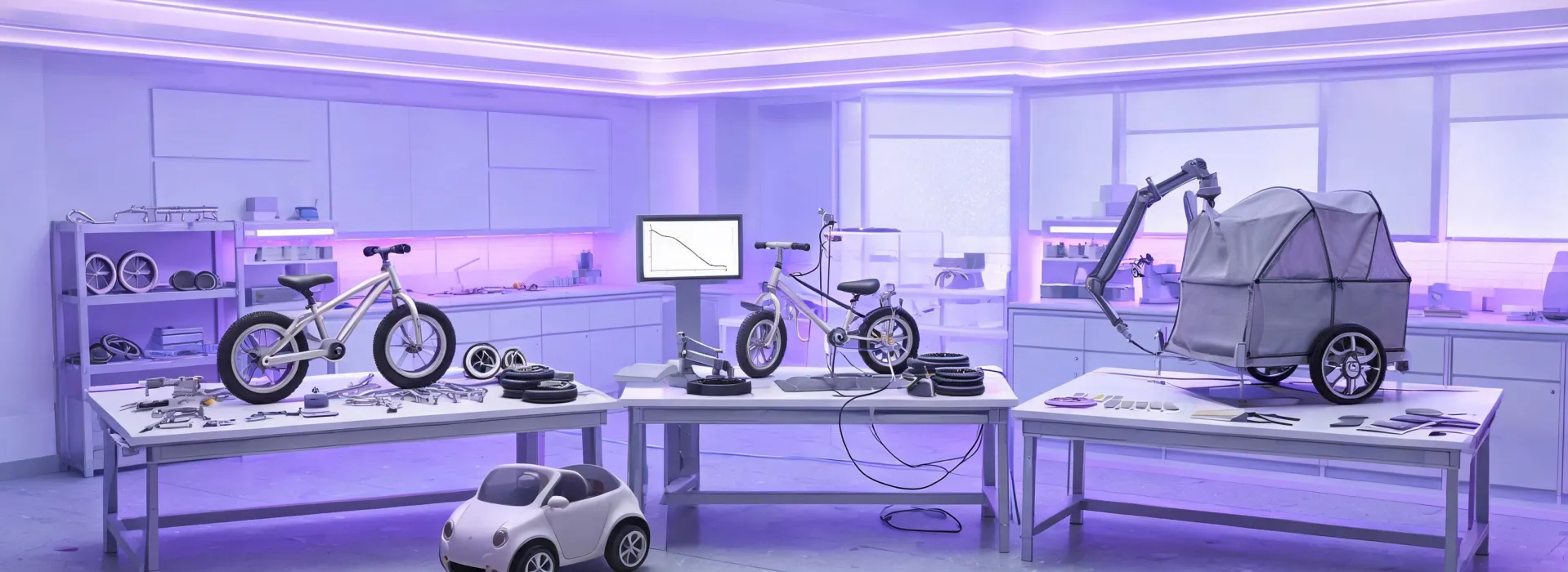
The lab translates a parent question into a structured recommendation. The demo is not a hidden formula; it is a clear set of factors families already understand. Child stage, inseam confidence, surface, storage, and adult support influence whether a balance bike, tricycle, pedal bike, trailer, or stroller-like product should lead the conversation. Showing those inputs makes the experience feel intelligent without asking parents to become mechanics.
Toddler and preschool stages prioritize stability, reach, and low-speed control.
Sidewalks, driveways, paths, and parks shift the tire and frame conversation.
Push handles, tow compatibility, and setup notes matter when adults guide the outing.
Seat range and handlebar reach should leave room without making day-one riding awkward.
A comparison flow shows how a child moves from balance confidence to pedal control. The card explains why inseam and reach matter more than age alone.
Prototype copy turns steering radius, seat position, and pedal rhythm into family-friendly language for product pages and retail tags.
Harness comfort, hitch checks, wheel stability, and visibility prompts are grouped into a pre-ride checklist that parents can scan quickly.
Accessory guidance connects the ride stage to helmet sizing and everyday safety habits without sounding like a warning label.
Use this form to ask for product selection support, stage mapping, retail language, or prototype-style comparison content. We will keep the answer focused on ride-on toys and kids vehicles.